

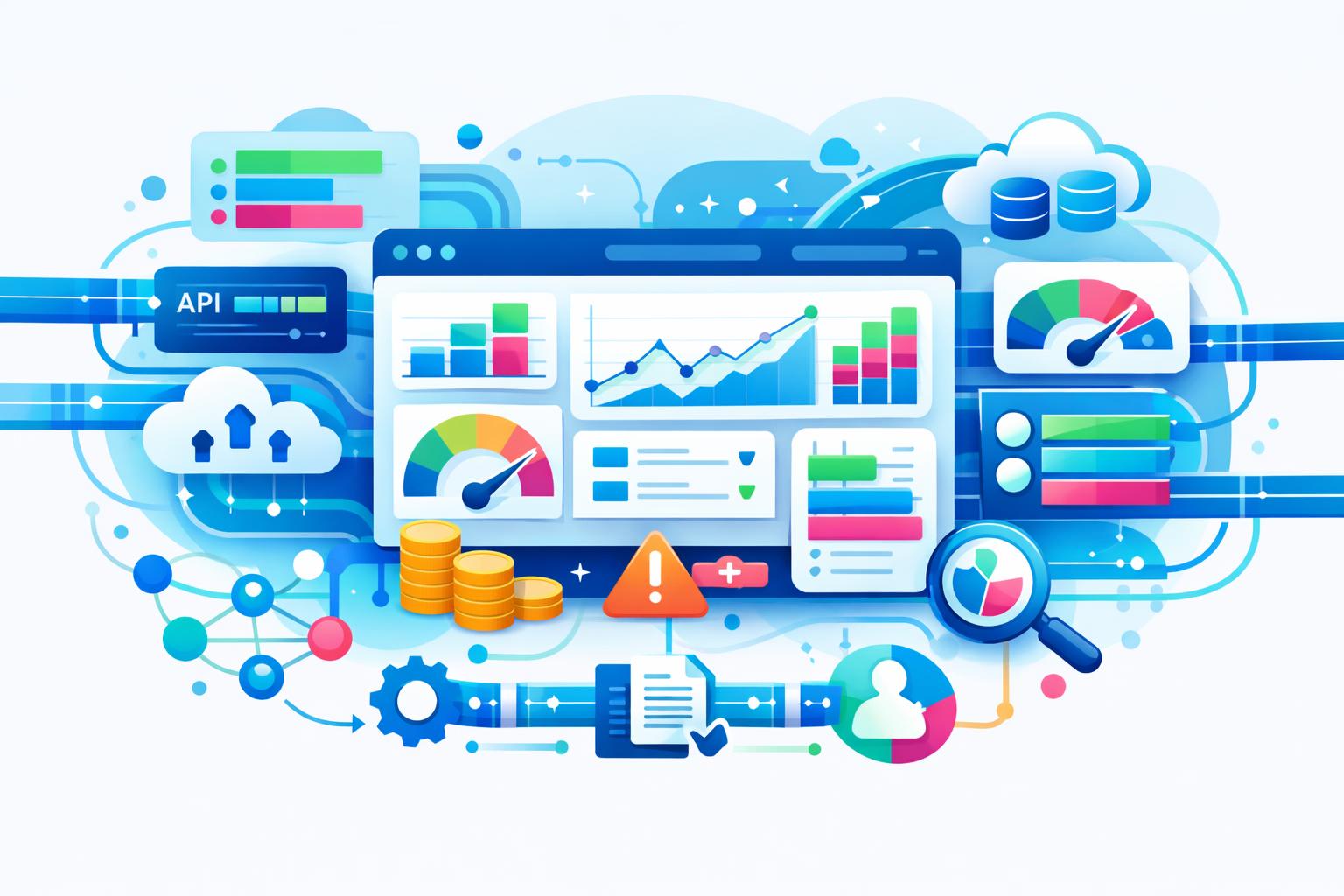
Usage-based billing has become one of the defining pricing models for modern SaaS products. API platforms, AI tools, infrastructure providers, and collaboration software increasingly charge customers based on actual consumption instead of relying solely on flat subscriptions. The model creates stronger alignment between product value and revenue growth, but implementation is far more demanding than simply tracking activity inside an application.
To make usage-based billing work, you need accurate event metering, configurable pricing logic, reliable invoicing, and customer-facing transparency around costs. This guide explains how to implement usage-based billing for SaaS from both a technical and operational perspective, including metering architecture, rate cards, overage handling, invoicing workflows, and how platforms like MainFoundry help unify billing operations across teams.
Building the Foundation for Usage-Based Billing
Every successful usage-based pricing strategy begins with selecting the right value metric. This is the unit customers ultimately pay for, including API requests, storage consumed, compute minutes, AI tokens processed, or documents generated. Strong value metrics align closely with customer outcomes, remain simple enough to estimate, and can be measured reliably at the product layer.
Many SaaS businesses avoid pure consumption pricing and instead adopt hybrid structures. A fixed subscription fee paired with metered overages creates predictable baseline revenue while allowing expansion as customers scale usage. Enterprise agreements often layer in minimum commitments, negotiated discounts, included quotas, or tiered pricing structures on top of those plans.
Customers accept variable pricing more easily when they can predict costs and clearly understand how usage translates into invoices.
After pricing strategy comes the technical implementation. Usage-based billing depends on event-level metering, meaning every billable action should generate a structured usage event. At minimum, events should include an account identifier, event type, quantity consumed, timestamp, and a unique idempotency_key to prevent duplicate billing during retries or failures.
Idempotency becomes especially important in distributed systems where duplicate messages naturally occur. Without safeguards, customers can easily be billed multiple times for the same event. Reliable billing infrastructure assumes retries will happen and safely ignores duplicate submissions instead of treating every request as unique consumption.
“The most resilient billing systems separate immutable usage data from flexible pricing rules so businesses can evolve pricing without corrupting historical records.”
Metering should occur as close to the product layer as possible. Storing raw usage events alongside aggregated billing summaries preserves auditability and gives teams flexibility to revisit calculations later. Modern products also require support for different meter types, including continuously increasing counters, gauges representing current state, and delta measurements that track changes between events.
This is where flexible infrastructure becomes critical. A configurable subscription and billing management platform should allow your team to define meters, aggregation windows, and pricing logic without rebuilding core systems every time pricing changes.
Most metering pipelines follow a consistent sequence. Usage events are ingested from APIs or applications, normalized into a common schema, aggregated into billing periods, stored for auditing, and then surfaced to invoicing, analytics, and customer dashboards. At scale, near-real-time processing becomes increasingly important because customers expect visibility into current spend before invoices arrive.
Rate cards sit at the center of the pricing engine. Mature pricing systems support flat rates, progressive tiers, quotas, discounts, regional pricing, taxes, and time-based changes. For example, one product may charge decreasing rates after the first million API calls each month, while another includes fixed quotas and only bills overages beyond predefined thresholds.
Operational visibility matters just as much as technical accuracy. MainFoundry’s custom workspace tools help centralize usage data, entitlements, billing workflows, disputes, and customer plan changes so finance, support, and product teams can work from the same operational view.
Managing Overages, Invoices, and Customer Transparency
Usage-based billing only succeeds when customers feel they remain in control of costs. Most SaaS companies combine included quotas with overage pricing so customers receive predictable baseline usage while still paying proportionally for additional consumption. To support that structure operationally, billing systems must define quotas, overage rates, alert thresholds, and either soft or hard usage limits.
Soft limits typically notify customers when they approach thresholds while allowing continued usage. Hard limits stop additional consumption once quotas are exhausted. In practice, most SaaS companies prefer warning-based systems and reserve strict enforcement for unpaid accounts or unusually high overages. Enforcement itself should happen at the API gateway or access layer to avoid expensive operations running before usage eligibility is checked.
Pro Tip: Run shadow billing before launch by comparing calculated usage invoices against your existing subscription model. This uncovers inconsistencies in event tracking and customer segmentation before production invoices are affected.
Real-time visibility has become a competitive requirement. Customers increasingly expect dashboards showing current usage, projected monthly costs, recent activity, and remaining quotas. Without transparency, invoice surprises quickly turn into support disputes and customer distrust.
- Current usage by meter and active billing period
- Included quota versus actual consumption totals
- Estimated end-of-month charges and threshold alerts
- Historical invoice access and downloadable usage exports
Platforms such as MainFoundry help operationalize this visibility by combining billing systems with marketing analytics and attribution workflows. This creates a unified operational environment where teams can correlate customer adoption, revenue expansion, and product engagement instead of managing disconnected systems.
Invoice clarity deserves equal attention. Usage-based invoices become difficult to interpret when line items rely on internal engineering terminology or poorly grouped charges. Effective invoice design separates recurring subscription fees from variable consumption charges while clearly showing billing periods, usage calculations, and overage pricing.
Finance operations also grow more complicated under variable billing models. Revenue recognition requirements under ASC 606 and IFRS 15 still apply, meaning businesses must distinguish between committed recurring revenue and variable usage revenue. Billing infrastructure therefore needs reliable integrations with accounting and ERP systems to prevent reconciliation problems at month end.
Many SaaS companies make the mistake of introducing too much pricing complexity too early. Simpler pricing structures are easier for customers to understand and significantly easier for internal teams to support. A phased rollout with one or two usage metrics typically produces better operational outcomes than launching advanced credits, discounts, and multidimensional pricing all at once.
AI-driven tooling is increasingly useful for monitoring billing operations at scale. MainFoundry’s AI-powered workflow platform helps teams analyze consumption trends, detect unusual spikes, automate reporting, and surface anomalies before they become customer-facing issues.
Key Takeaways
Implementing usage-based billing for SaaS requires both strong technical infrastructure and thoughtful pricing strategy. The most successful companies focus on transparency first by giving customers accurate usage visibility, predictable pricing behavior, and invoices that clearly explain every charge.
Choose value metrics that align with customer outcomes, build event-level metering with strong auditability, and separate usage collection from pricing logic so your business model can evolve safely over time. Additionally, prioritize dashboards, alerts, and clear invoice design to reduce disputes and improve customer trust.
If your team is evaluating usage-based pricing, infrastructure flexibility matters as much as the pricing model itself. Platforms like MainFoundry help unify billing, finance, customer operations, and reporting workflows so pricing changes do not become engineering bottlenecks. Learn more at mainfoundry.com or contact the team directly at mainfoundry.com/contact.
Related Reading
Explore subscription and billing management solutions to learn how flexible billing infrastructure supports pricing experimentation and scalable SaaS operations.