

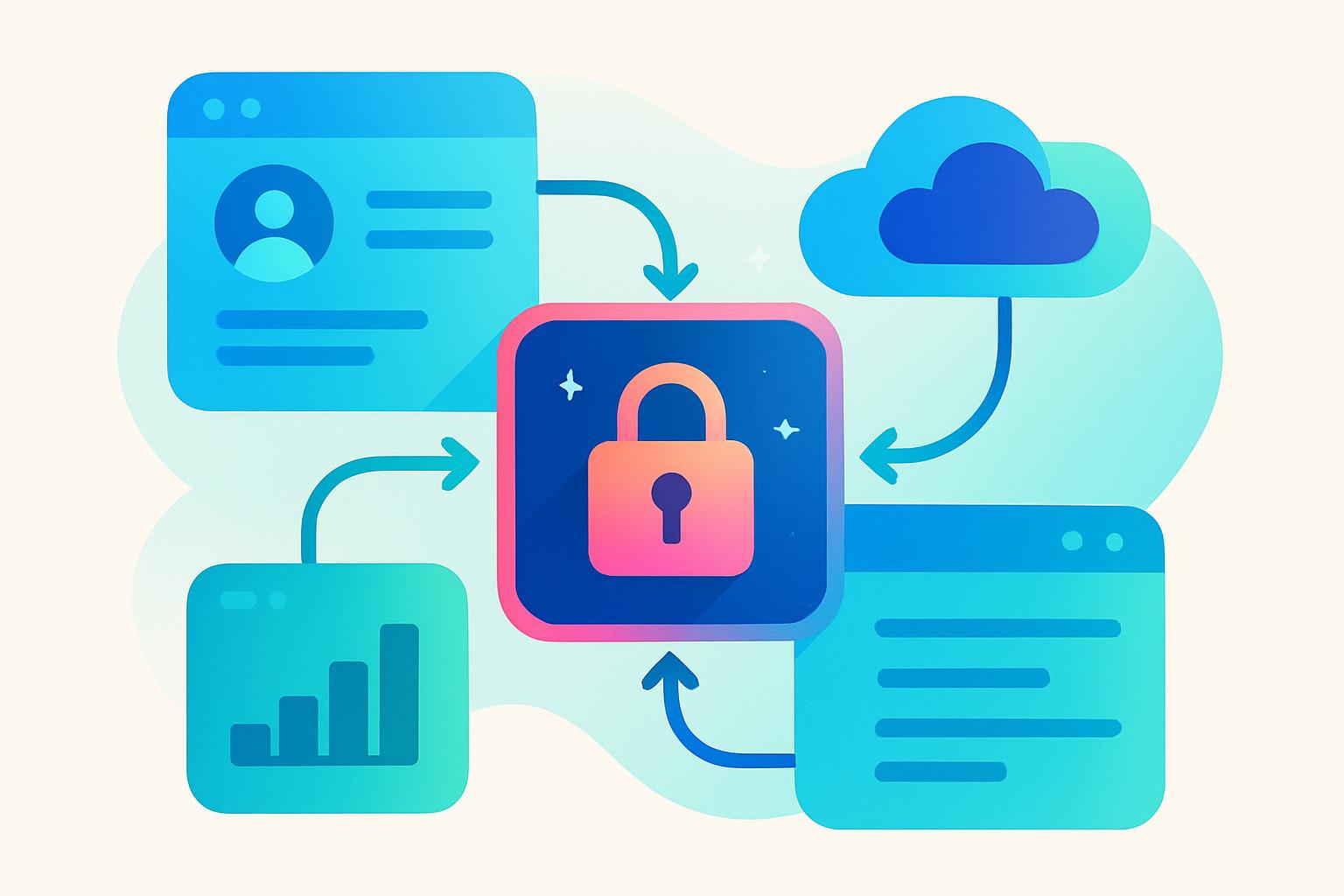
When your business applications need to connect securely with third-party systems, OAuth integration has become the gold standard for authentication. By allowing apps to access data without exposing passwords, OAuth 2.0 creates a safe and flexible model for modern enterprise environments. This guide unpacks how OAuth integration works, why it’s crucial for cloud-based workflows, and how platforms like MainFoundry power secure authentication across CRM, marketing, and finance ecosystems.
Why OAuth Integration Matters for Business Applications
Unlike traditional password-based authentication, OAuth 2.0 operates through token-based authorization. Instead of permanent credentials, applications use temporary access tokens issued by trusted identity providers such as Google, Microsoft, or internal corporate systems. These tokens validate identity, enforce permissions, and allow instant revocation—making OAuth ideal for organizations juggling multiple SaaS integrations.
Imagine an employee accessing MainFoundry’s CRM workspace using corporate Microsoft credentials. OAuth handles the secure handshake, issues a scoped token, and grants access only to approved modules like marketing analytics or client management—without ever sharing a password.
“OAuth transforms identity management into a flexible, secure layer—minimizing risk while streamlining enterprise workflows.”
In organizations practicing broad SaaS adoption, OAuth doesn’t just reduce attack surface—it also strengthens operational efficiency. Businesses have reported faster deployments, fewer password resets, and improved compliance once OAuth becomes a standard. One major financial enterprise documented a 70% decline in identity-related incidents post-implementation, reinforcing the model’s scalability and trustworthiness.
Implementing OAuth for a Secure Multi-Application Ecosystem
A successful OAuth deployment typically revolves around three stages: client registration, authorization, and token management. Each application registers with an identity provider for its unique client ID. When users log in, they’re directed to the provider’s secure portal for approval. Once confirmed, an access token is returned—granting temporary rights to make authenticated API calls without storing sensitive credentials.
Enterprises can further extend OAuth integration by syncing with existing directories like Active Directory or using federated identity services to enforce consistent access policies. Through access governance, administrators preserve complete visibility into role authorization and compliance, ensuring transparency across cloud and internal systems.
Pro Tip: Tie OAuth authentication to unified directories whenever possible. It simplifies audit logging, supports compliance, and eliminates redundant user management across SaaS apps.
Platforms like MainFoundry Security enhance this further, incorporating fine-grained user roles, encrypted token management, and compliance oversight into the OAuth process. Common implementations include single sign-on, secure API integrations for marketing, and controlled client access within portals such as billing or analytics tools.
Enterprises using OAuth report up to 50% faster onboarding and over a 70% reduction in identity incidents.
Consider the example of a service team entering a unified workspace where all resources—from client data to invoices—exist under one secure login. OAuth seamlessly grants access only to authorized areas, reducing friction and maintaining strict visibility over every authentication event. For developers, integrating SDKs accelerates rollouts by enabling secure sign-ins without custom identity infrastructure.
Key Takeaways
- OAuth 2.0 delivers secure delegated authentication through tokens rather than static passwords.
- Businesses benefit from fewer identity breaches and faster cloud integrations through centralized token management.
- Platforms like MainFoundry apply OAuth principles across CRM, marketing, and finance systems for consistent security.
- Unified authentication boosts efficiency, reduces IT overhead, and enhances compliance readiness.
Related Reading
Explore MainFoundry’s AI-powered workspace suite or learn more about enterprise-grade integrations at mainfoundry.com/contact.