

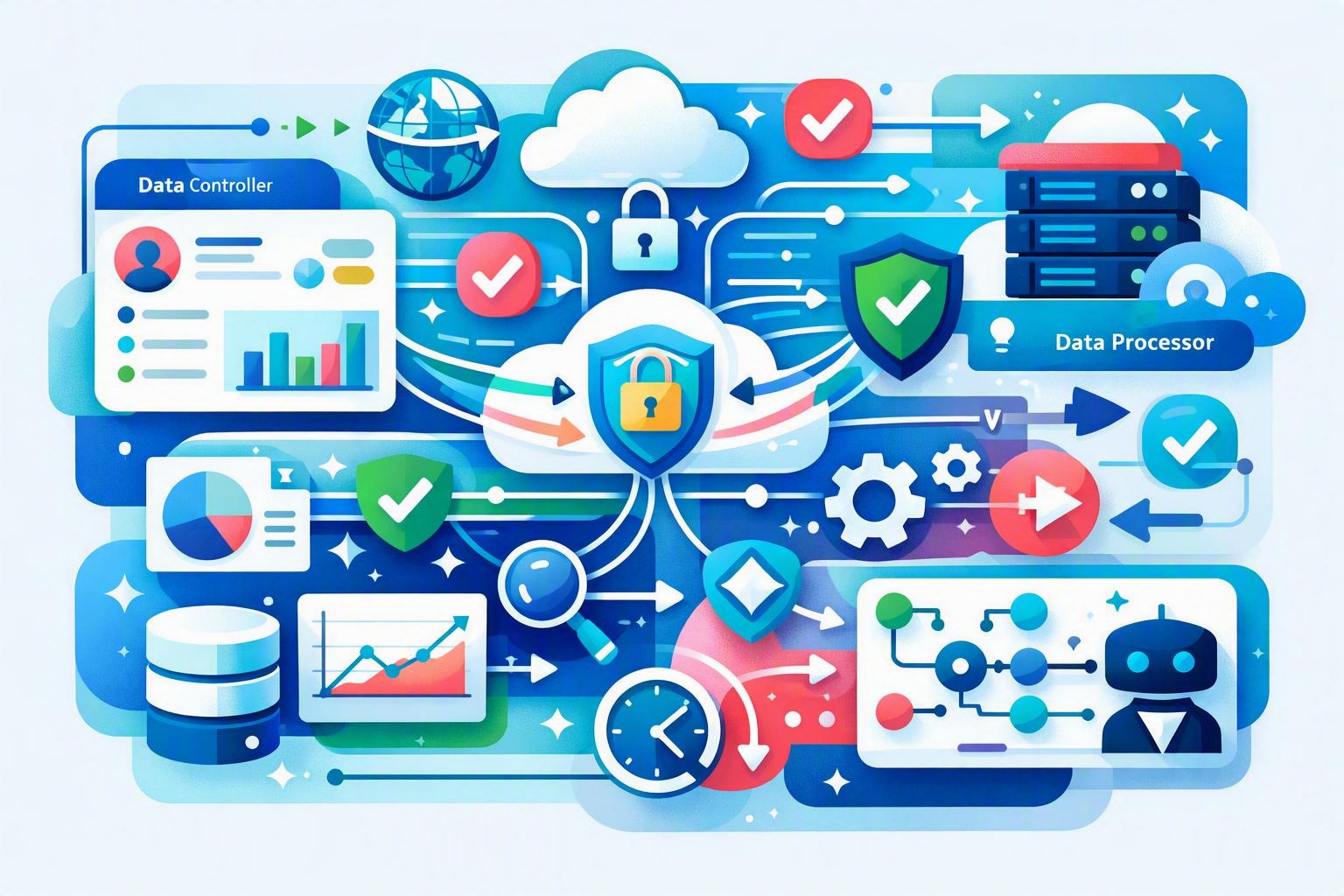
A data processing agreement is no longer a background legal document that only compliance teams review. For SaaS companies serving B2B customers, it directly affects procurement approvals, vendor trust, security expectations, and ongoing GDPR compliance. Nearly every modern business workflow now contains personal data, including CRM records, billing details, meeting activity, analytics, and customer communications tied to identifiable individuals.
This guide explains what a DPA means in practical SaaS operations, when GDPR requires one, and how controller-versus-processor responsibilities work in real B2B environments. You will also see how integrated platforms such as MainFoundry fit into these relationships across CRM, analytics, finance, collaboration, and AI-powered workflows.
What a Data Processing Agreement Means for SaaS Businesses
Under GDPR Article 28, a DPA becomes mandatory whenever one company processes personal data on behalf of another organization. In most SaaS relationships, the customer acts as the controller because they determine why the data is collected and how it should be used. The SaaS provider acts as the processor because it stores, organizes, analyzes, or transmits that information while delivering the service.
For example, a company using MainFoundry’s customer relationship management tools decides which contacts enter the system, how long records should be retained, and which business activities those contacts support. MainFoundry processes that information according to the customer’s documented instructions.
“A strong SaaS DPA is both a legal safeguard and an operational transparency document.”
A well-written DPA formalizes the boundaries of data use and explains how security, deletion, sub-processors, and breach response are handled. This matters because B2B data still falls within GDPR scope when tied to identifiable individuals, including work email addresses, names, job titles, support interactions, meeting recordings, and usage activity.
Many SaaS businesses also operate in hybrid roles. A provider may act as a processor for customer-uploaded records while simultaneously acting as a controller for its own billing systems, product analytics, or account administration. Clear contracts should separate these activities to avoid confusion during audits, vendor reviews, or incident response situations.
Pro Tip: Enterprise procurement teams increasingly compare DPA language against real operational practices, including security documentation, sub-processor disclosures, and international transfer mechanisms.
Operational transparency has become just as important as legal wording. Customers want visibility into where data is stored, which cloud vendors are involved, and how transfers outside the EEA or UK are managed. A vague or outdated DPA can slow procurement cycles because controllers are required to work only with processors that demonstrate appropriate safeguards.
Security commitments are another central requirement. GDPR expects processors to implement technical and organizational safeguards appropriate to the risk level. In SaaS environments, that typically includes encryption, access controls, activity logging, backups, confidentiality obligations, and documented incident response procedures.
Data Controller vs Data Processor in B2B SaaS
The distinction between a data controller and a processor is fundamental to GDPR compliance, yet many modern SaaS platforms blur the operational lines. Integrated software environments often combine analytics, communication tools, workflow automation, AI functionality, and collaboration systems into a single platform.
Consider a B2B organization using MainFoundry to manage customer relationships, automate reporting, organize projects, and monitor subscriptions. The customer determines which contacts are uploaded, which campaigns are run, and how retention periods are applied. In those situations, the customer remains the controller.
MainFoundry acts as the processor when it stores customer records, generates dashboards, syncs communication activity, or supports operational workflows through custom business workspaces. However, the provider may separately act as a controller for account billing, service analytics, or direct marketing communications.
Modern SaaS platforms often operate as both controller and processor depending on the specific data activity involved.
This distinction becomes increasingly important with AI-enabled products. Features such as intelligent search, automated reporting, transcription, or workflow recommendations can introduce additional processing layers. Customers using MainFoundry’s AI-powered workflow tools still need assurance that processing activities remain governed by documented instructions, defined retention policies, and appropriate security controls.
DPAs also matter after the customer relationship ends. Businesses expect to export their information in usable formats and understand exactly how quickly data is deleted from active systems and backups. Ambiguous deletion language is one of the most common issues uncovered during vendor reviews.
The same applies to breach response obligations. GDPR requires processors to notify controllers without undue delay after discovering a personal data breach. Mature SaaS vendors usually document escalation timelines, communication procedures, and the type of incident information customers can expect to receive.
Sub-processors remain another major area of scrutiny. Most SaaS providers depend on cloud infrastructure vendors, analytics tools, support platforms, or communication services. GDPR requires processors to disclose these relationships and apply equivalent contractual protections throughout the vendor chain. Enterprise buyers increasingly expect public sub-processor lists and notification procedures for future updates.
International transfers are equally important for globally distributed platforms. If personal data moves outside the EEA or UK, the DPA should identify the legal transfer mechanism being used, including Standard Contractual Clauses or adequacy decisions. Customers want evidence that transfers are both legally structured and operationally secure.
Key Takeaways
- A SaaS DPA is mandatory under GDPR whenever a provider processes personal data on behalf of customers.
- Controllers determine why data is processed, while processors handle the data according to documented instructions.
- Strong DPAs clearly document security controls, sub-processors, retention policies, deletion timelines, and international transfer mechanisms.
- Integrated platforms handling CRM, analytics, marketing, finance, and AI workflows require especially clear operational transparency.
- Reviewing a vendor’s DPA alongside its real security and operational practices is an important part of SaaS due diligence.
If your organization is evaluating operational software, review how the provider handles controller and processor responsibilities across CRM, analytics, workflow automation, and AI systems. You can learn more about MainFoundry’s platform capabilities, integrations, and operational tools at https://www.mainfoundry.com or contact the team directly at https://www.mainfoundry.com/contact.
Related Reading
Explore MainFoundry’s marketing analytics and attribution tools to understand how integrated customer data workflows affect compliance and operational visibility.