

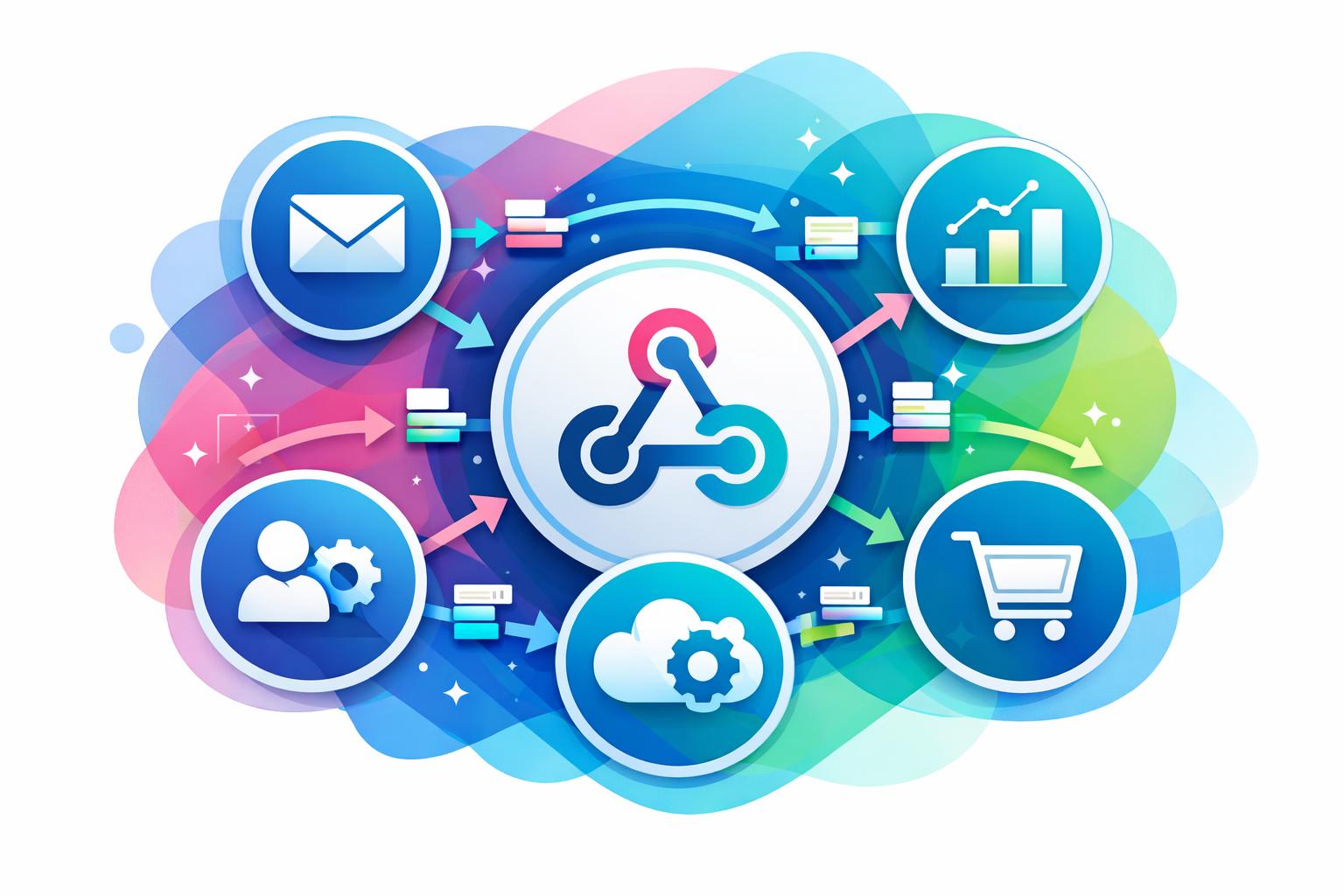
Modern SaaS businesses thrive on connectivity, but not every tool integrates seamlessly with others. That’s where webhook automation steps in—providing instant, event-driven communication between systems and eliminating the delays of traditional polling. In this article, you’ll learn how webhook automation powers real-time workflows, the patterns SaaS teams rely on daily, and how platforms like MainFoundry make it possible to manage custom event-driven workflows without engineering overhead.
Why Event‑Driven Automation Transforms SaaS Workflows
Unlike legacy integrations that constantly query data sources for updates, webhook‑driven workflows let systems communicate immediately when an event occurs. A webhook sends a payload containing relevant data, triggering instant actions in downstream systems without delay or manual syncing. This shift to event‑driven architecture keeps operations responsive, especially in environments where timing matters—such as lead qualification, billing updates, or subscription renewals.
Polling‑based integrations often suffer from latency and resource strain. Webhooks eliminate this by assigning notification responsibility to the source system, reducing API calls and maintaining near real-time processes. In practice, this allows a marketing platform to push qualified leads to a CRM instantly or a billing system to alert finance tools when a payment status changes. The result: faster automation and leaner infrastructure that scales gracefully with event volume.
“Webhook automation turns disconnected SaaS tools into synchronized, event‑aware systems that act as soon as business events occur.”
Core Patterns and Infrastructure for Reliable Webhook Automation
Most webhook‑based SaaS workflows fall into repeatable patterns. Lifecycle synchronization, real‑time analytics capture, and cross‑team handoffs dominate how data moves across modern stacks. When a user upgrades their plan, a webhook can instantly update customer profiles in CRM, trigger new campaign eligibility within marketing analytics, and log the event for reporting—all within seconds.
Yet, scaling webhook automation introduces complexity. Retries, payload validation, security signing, and data transformations require disciplined setup. Without clear retry logic, temporary network errors can lead to lost events. Proper validation of signed requests protects against spoofing and ensures only authentic payloads reach endpoints. Teams also benefit from observability—tracking delivery attempts and surfacing issues—so automation remains reliable.
- Design webhook events around meaningful business milestones, not arbitrary updates.
- Keep payloads contextual but lightweight to minimize processing overhead.
- Implement thorough retry and logging mechanisms for consistent delivery.
- Establish clear ownership over your source‑of‑truth data systems.
Platforms like MainFoundry CRM simplify this by serving as both a source and destination for events. Webhooks from external systems can update contacts and companies directly, triggering tasks or downstream events automatically. When paired with custom workspaces, teams can define data structures that evolve alongside internal workflows—enabling flexible automation without engineering bottlenecks.
Pro Tip: Build webhook observability dashboards early. They become invaluable for debugging, reliability audits, and building team confidence in automation decisions.
Key Takeaways
Webhook automation for SaaS tools isn’t about technical perfection—it’s about responsiveness. By adopting event‑driven design, you can turn disconnected tools into cohesive systems that react instantly when business events occur. Remember these guiding principles:
- Event‑driven architecture delivers faster actions with less overhead than polling methods.
- Recognizing repeatable patterns like lifecycle sync and analytics capture simplifies workflow design.
- Reliable retry and security practices ensure data integrity and trust between systems.
- Centralizing webhook workflows inside a unified platform such as MainFoundry provides scalability and reduces integration fragmentation.
To explore how MainFoundry can become your automation hub, visit MainFoundry Contact and start designing webhook‑driven workflows that respond to your business in real time.