

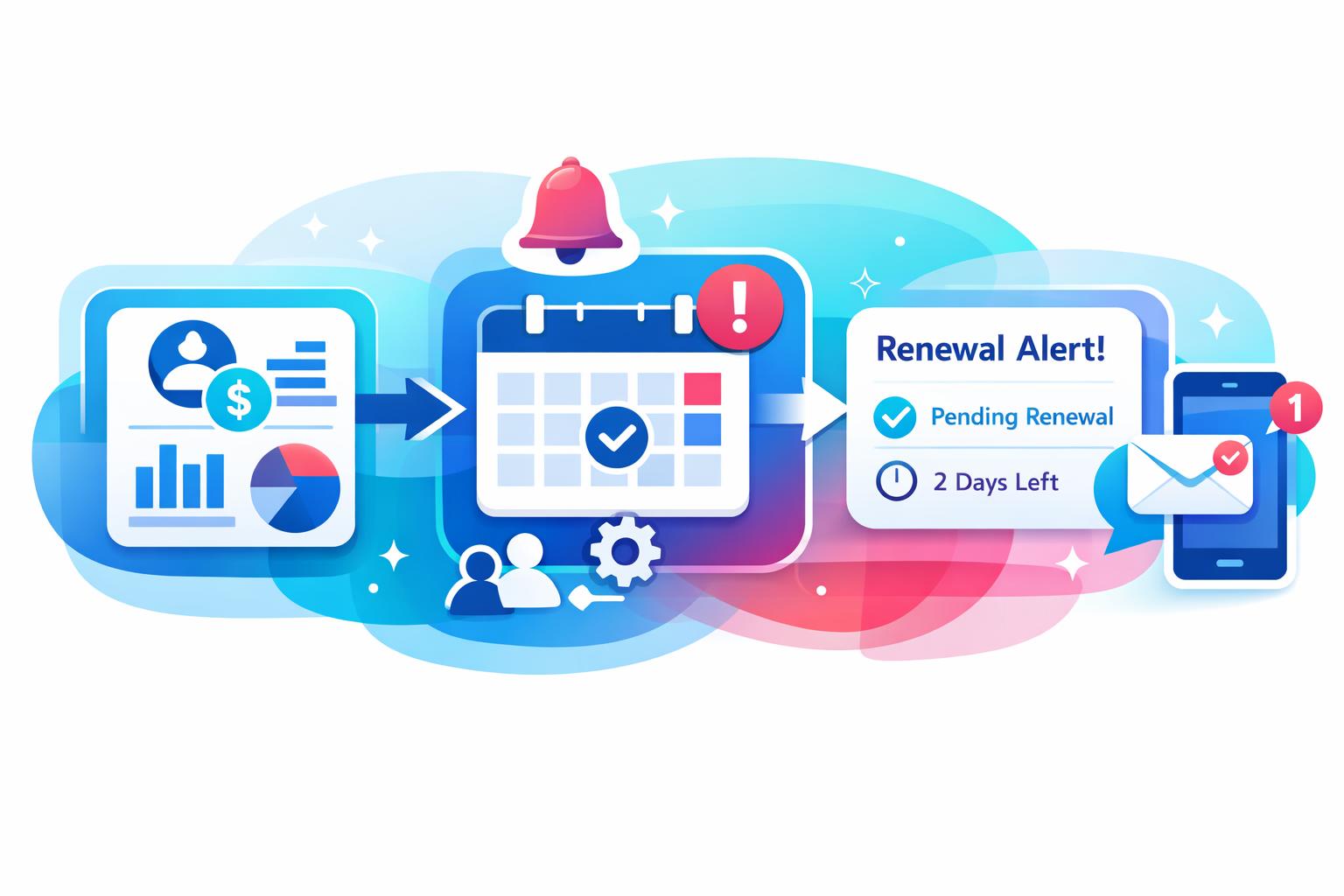
If you’ve ever missed a SaaS renewal deadline—or renewed a tool no one was using—you already know why learning how to automate SaaS renewal reminders matters. As your software stack expands, manual tracking through spreadsheets or scattered calendar alerts can’t keep up. The result: rushed renewal decisions, unwanted auto-renewals, and frustrated finance teams chasing lost visibility.
The good news is it doesn’t have to be complicated. With connected subscription data, intelligent workflows, and proactive alerts, renewals can become a predictable, low-effort process. In this guide, we’ll break down exactly how to set up automated SaaS renewal reminders, from timing strategies and escalation paths to personalization and tracking renewal performance inside platforms like MainFoundry.
How to Automate SaaS Renewal Reminders with Subscription-Driven Workflows
Every reliable renewal workflow begins with centralized subscription data. Before automation can help, your system needs to know what’s renewing, when it’s renewing, and who owns the decision. Pull contract terms, renewal dates, and costs into a single source of truth instead of juggling billing tools and emails. In MainFoundry Workspaces, for instance, renewals can be triggered automatically from live subscription data—no manual updates required.
Once data is centralized, define reminder timing that matches how your organization actually makes decisions. Most teams benefit from a signal roughly 90 days before renewal, giving stakeholders time to assess usage or adjust terms. As the date approaches, subsequent reminders should become more specific and action-oriented. Since these reminders draw from real subscription fields, they automatically pause once a decision is made—eliminating alert fatigue.
Automation truly shines when reminders are personalized with usage and spend insights. Early messages might include adoption trends; mid-cycle notifications can surface inactive licenses, while final alerts focus on direct choices like renew, downgrade, or cancel. With connected CRM data and finance insights, workflows can dynamically route notifications based on contract value or renewal risk—ensuring the right people engage at the right moments.
“The best renewal workflows don’t just remind—they adapt in real time to how each contract performs, reducing noise while raising accountability.”
Still, even well-timed reminders can stall without escalation paths. If no action occurs within a defined window, a second notice can escalate to a manager or finance lead with additional context like declining usage. High-risk renewals may warrant direct alerts to IT or procurement. By tying these triggers to behavior—rather than arbitrary dates—automation helps focus attention where it truly matters.
Flexibility in communication channels is equally crucial. While email is a standard, integrating reminders into Slack, Microsoft Teams, or visible renewal dashboards drives faster action. Because each alert is event-driven, you can meet decision-makers where they already work instead of relying on static inbox threads.
When renewal data and workflow logic are connected, reminders stay accurate, timely, and context-aware—without human upkeep.
Tracking performance closes the loop. Renewal automation should feed into continuous reporting that measures renewal rates, response times, and how often escalations occur. With MainFoundry Marketing Analytics, teams can monitor renewal trends and adjust timing rules dynamically to keep performance improving over time.
Tracking and Optimizing Renewal Performance Over Time
Once automation is in place, visibility is finally measurable instead of anecdotal. You can see which renewals close early, which linger until the last alert, and which consistently trigger escalations. These insights make the process self-improving. If early notifications aren’t prompting action, adjust the message content or timing. If escalations fire too often, clarify ownership or add more context to earlier reminders.
Over time, this approach enhances financial planning as well. Early renewal decisions feed into forecasts, giving finance better clarity on upcoming commitments. For organizations managing dozens of SaaS contracts, that transparency directly supports budgeting and spend control.
AI-driven platforms like MainFoundry’s AI Assistant take this insight further, using predictive analytics to forecast cancellation risk or identify consolidation opportunities before renewal cycles even begin. This transforms renewal management from reactive to proactive, letting teams act on data rather than deadlines.
Pro Tip: Treat your renewal workflow like a living system. Regularly review performance metrics and refine triggers or message content to maintain engagement and reduce unnecessary reminders.
Key Takeaways
- Centralize subscription and renewal data to ensure automation runs on accurate information.
- Time reminders thoughtfully to align with real decision-making windows.
- Personalize outreach using usage, cost, and ownership data for better engagement.
- Implement escalation paths based on inactivity or risk signals to keep renewals on track.
- Continuously measure performance and iterate to strengthen automation over time.
Automating renewals isn’t about sending more reminders—it’s about creating a decision-ready system powered by accurate data and smart workflows. If you’re ready to see this in action, explore how unified workflows, subscription management, and AI insights come together inside MainFoundry.