

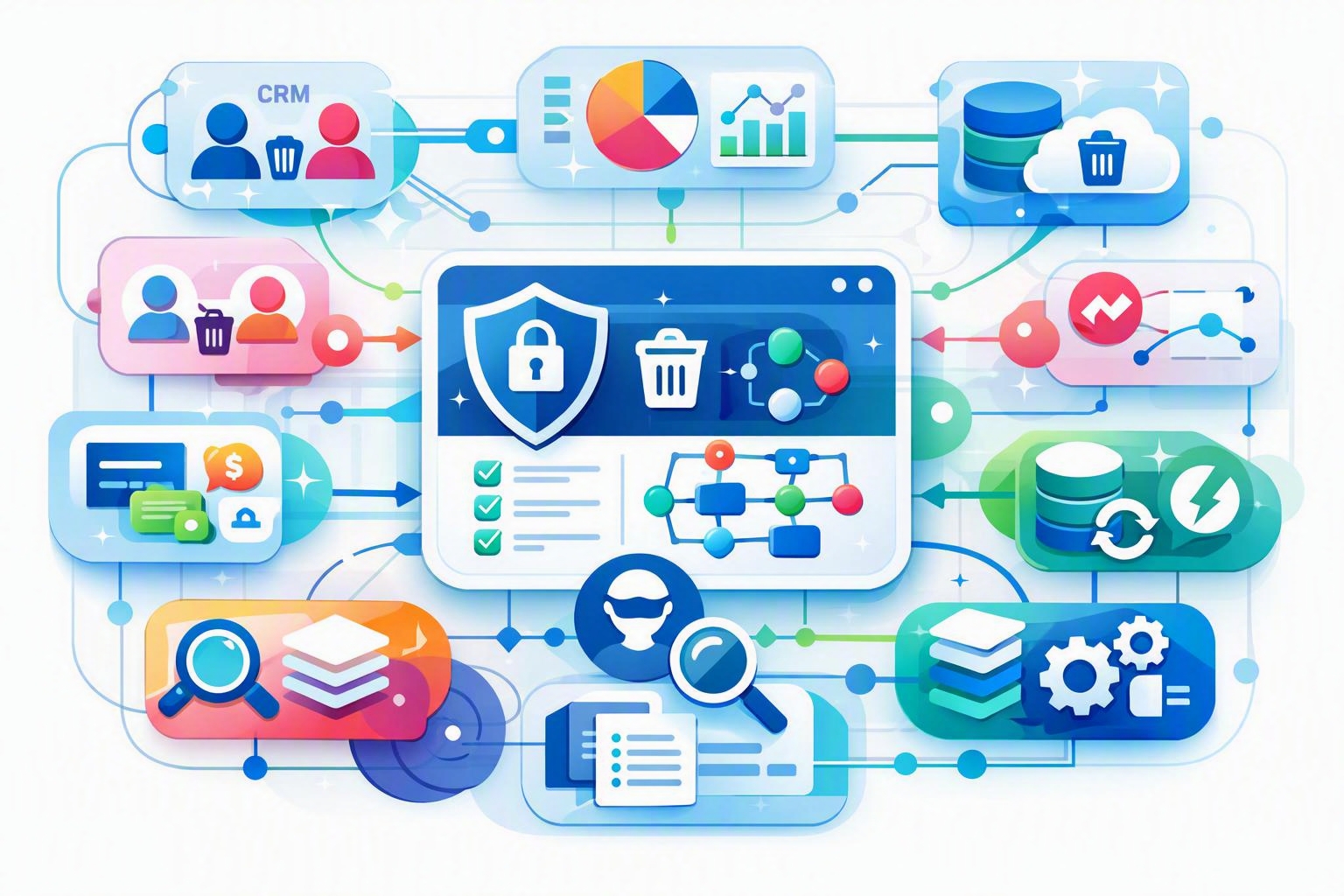
Handling a GDPR data deletion request becomes far more complicated once you map how information flows through a modern SaaS platform. Customer records rarely stay in one place. They spread across CRMs, analytics platforms, billing systems, support tools, backups, search indexes, and third-party integrations, creating operational blind spots that many growing software companies underestimate.
The challenge is not simply removing data. You also need to verify identities, coordinate deletion workflows across connected systems, manage backups responsibly, and maintain defensible audit records without storing unnecessary personal information. This guide explains how SaaS companies can build practical deletion workflows, reduce compliance gaps, and improve visibility through centralized operational systems such as custom business workspaces and unified architectures.
Building a Scalable GDPR Deletion Process
Under GDPR Article 17, organizations may need to erase personal data when consent has been withdrawn, processing is unlawful, or the information is no longer necessary. In practice, SaaS teams need a repeatable workflow instead of relying on manual deletions performed differently every time a request arrives.
Identity verification is the first operational checkpoint. Many companies either skip verification entirely or request excessive information from users. A more balanced approach uses minimal confirmation methods such as authenticated sessions, verified email ownership, or documented authorization for approved representatives.
“The hardest part of GDPR deletion is rarely deleting one record. It is knowing every place the data exists.”
Once a request is validated, teams need visibility into every location where personal information may exist. Fragmented SaaS environments often accumulate disconnected datasets over time, especially when departments adopt separate tools independently. Customer information may simultaneously appear in exports, support conversations, analytics dashboards, and billing systems.
A centralized data inventory dramatically improves deletion accuracy. Instead of searching manually during each request, your organization should already understand which systems store personal information and how records connect through shared identifiers. Unified environments that combine operational workflows with a centralized CRM and relationship management system reduce the number of isolated deletion procedures required.
Pro Tip: Maintain a continuously updated map of every system, vendor, cache layer, and analytics pipeline that processes personal data. This eliminates guesswork when deletion requests arrive.
Modern SaaS platforms increasingly rely on cascade deletion workflows rather than manual removals. In an event-driven architecture, one approved request can trigger automated deletion tasks across databases, analytics tools, storage systems, indexes, and third-party services. For example, deleting a CRM user may also require removing support attachments, invoices, campaign attribution records, meeting recordings, and internal notes.
Search indexes and cache layers are commonly overlooked. Teams often erase records from primary databases but forget systems such as Redis, reporting layers, asynchronous queues, or Elasticsearch indexes that still expose customer information. Effective deletion orchestration must account for these secondary systems as carefully as live production data.
Subprocessors require equal attention. Payment providers, support platforms, email vendors, and monitoring systems may all hold copies of customer data. GDPR compliance extends beyond your own infrastructure, meaning workflows should include automated processor notifications or deletion API calls whenever possible.
Managing Backups, Confirmations, and Audit Records
Backups create some of the most misunderstood obligations in GDPR workflows. Most operational guidance focuses on prompt deletion from live systems combined with documented retention procedures rather than immediate editing of historical backup archives. The important factor is demonstrating that deleted information cannot unintentionally reappear.
A defensible backup strategy generally includes rapid deletion from active environments, clearly documented backup retention windows, and automated safeguards during recovery events. Many SaaS companies use internal deletion indexes containing minimal markers instead of storing erased personal data. If a backup restoration reintroduces deleted records, the system references the deletion index and removes the data again automatically.
Deletion workflows fail most often when data silently resurfaces through backups, analytics pipelines, or forgotten cache layers.
User communication matters just as much as the technical process. Confirmation workflows should acknowledge receipt of the request, provide updates if processing takes additional time, and issue a final completion notice after deletion has been executed. These messages should remain concise, practical, and limited to relevant information without exposing internal infrastructure details.
At the same time, organizations still need reliable internal evidence showing that requests were handled appropriately. A practical audit record typically includes the request date, verification result, legal basis for approval or denial, systems affected, processor notifications, and completion timestamps. Many teams reduce risk by storing hashed identifiers or internal deletion tokens instead of raw personal information.
Unified operational environments simplify compliance because customer records, workflows, finance systems, and analytics pipelines remain connected in a centralized control layer. Architectures similar to MainFoundry’s integrated model help coordinate deletion actions across marketing analytics and attribution tracking, operational workspaces, CRM systems, and finance records while maintaining stronger governance through connected security and governance controls.
Key Takeaways
The GDPR right to erasure is ultimately an operational discipline rather than a one-time legal exercise. SaaS companies that document their data flows, automate deletion orchestration, and maintain clear backup procedures are in a much stronger position when requests arrive.
- Maintain a complete inventory of systems, vendors, and services storing personal data.
- Use automated cascade deletion workflows instead of relying on manual removals.
- Manage backups through documented retention policies and restoration safeguards.
- Keep user confirmations concise while retaining only proportionate audit evidence internally.
- Evaluate operational infrastructure based on how well it supports governance, visibility, and deletion orchestration.
As SaaS ecosystems become increasingly interconnected, fragmented stacks create more compliance risk over time. Businesses evaluating long-term operational infrastructure should consider how centralized systems improve governance visibility and reduce orphaned data across disconnected tools.
Ready to simplify connected workflows across CRM, marketing, finance, and operational systems? Explore how MainFoundry supports unified business operations at https://www.mainfoundry.com.
Related Reading
Learn more about connected operational infrastructure through custom business workspaces and centralized operational workflows designed for scalable governance.