

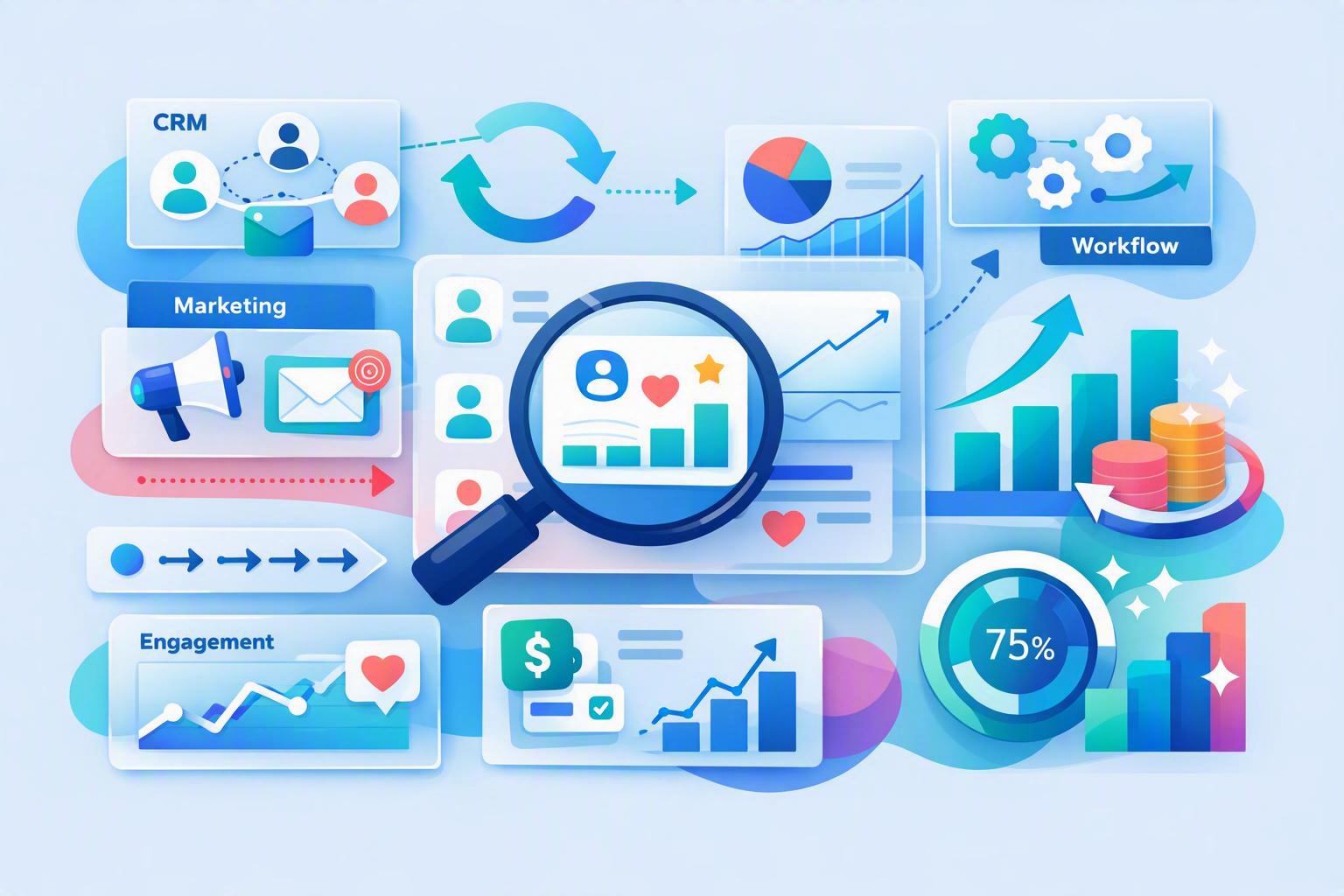
For SaaS companies, growth no longer depends entirely on winning new customers. Rising acquisition costs and increasing competition have shifted attention toward a more sustainable strategy: helping existing customers succeed, expand, and stay longer. As a result, customer success has evolved from a post-sale support function into a major driver of recurring revenue growth.
This article explores why customer success has become a core operational strategy for modern SaaS businesses, how retention and expansion improve long-term growth efficiency, and why unified operational visibility is critical for managing the customer lifecycle effectively. It also highlights how platforms like MainFoundry help connect CRM, marketing, finance, and workflows into a single customer view.
Why Customer Success Drives More Efficient SaaS Growth
For years, SaaS growth strategies centered heavily on acquisition. More leads, more demos, and larger pipelines were viewed as the primary path to scale. However, companies increasingly recognize that aggressive acquisition loses effectiveness when customer retention remains weak. Every churned account reduces recurring revenue while forcing sales and marketing teams to spend even more to replace lost growth.
Customer success changes that equation by increasing the value of accounts after the initial sale. Instead of treating revenue as a one-time transaction, teams focus on adoption, engagement, renewals, and expansion opportunities over time. This approach directly improves customer lifetime value while reducing the financial pressure caused by churn.
“The most efficient SaaS companies are not only winning new customers. They are systematically growing revenue from existing accounts.”
Expansion revenue often becomes even more valuable than new-logo acquisition because existing customers already trust the platform and understand its workflows. When customers increase seats, adopt additional products, or expand usage across departments, growth happens with far less friction than entirely new sales cycles.
This is why metrics like Net Revenue Retention, often referenced as NRR, have become central indicators of SaaS health. High-performing companies prioritize NRR because it measures whether customer relationships become more valuable over time after accounting for expansion, downgrades, and churn.
Retention, expansion, and customer advocacy now influence SaaS growth as much as acquisition pipelines.
Strong customer success operations also improve efficiency across the business. Sales teams spend less time replacing lost accounts, marketing budgets generate stronger payback periods, and finance teams gain more predictable recurring revenue forecasts. Product teams benefit as well because engaged customers provide clearer feedback and usage insights.
Referral-driven growth creates another compounding advantage. Customers who achieve measurable outcomes are more likely to advocate internally, participate in case studies, and recommend the platform to peers. These referrals often convert faster because trust already exists before the first sales conversation begins.
The challenge is that customer risk signals rarely appear in one place. Declining product usage, invoice disputes, reduced engagement, or support frustration often emerge across separate systems long before renewal discussions begin. Without connected operational visibility, teams may miss those warning signs until churn becomes unavoidable.
Integrated platforms help solve this problem by centralizing customer context. MainFoundry’s customer relationship management tools combine communication history, company records, activity tracking, and revenue visibility into a unified environment. Instead of piecing together fragmented reports, customer success teams can work from a complete customer timeline.
The Unified Customer View That Improves Retention and Expansion
Customer success becomes far more effective when teams operate with complete visibility across the customer lifecycle. A customer might appear healthy based on support interactions while product adoption quietly declines. Another account may seem inactive until marketing engagement reveals strong interest in new features or webinars. Disconnected systems create blind spots that directly affect retention outcomes.
A unified operating model allows teams to monitor account health continuously instead of waiting for renewal periods. Engagement trends, support activity, onboarding milestones, billing changes, and product usage all become visible in one place. This gives customer success managers the ability to intervene proactively and personalize customer guidance earlier.
Pro Tip: Customer churn often starts with small operational signals such as declining engagement, payment friction, or missed implementation milestones. Unified visibility helps teams identify these patterns before renewal risk escalates.
For example, a customer success manager may notice that webinar attendance has dropped while usage remains strong within only one department. That combination could indicate onboarding friction alongside a potential expansion opportunity. Without integrated data, those signals would likely remain isolated across teams.
Marketing visibility plays an important role in this process. MainFoundry’s marketing analytics and attribution tools connect campaign engagement directly to customer outcomes, allowing teams to track webinars, conversions, and engagement alongside account activity.
Financial context matters equally. Subscription changes, invoice delays, and payment disputes can all signal broader customer risk. MainFoundry’s subscription and billing management system helps organizations connect recurring revenue activity directly to customer relationship data so teams can coordinate responses faster.
Workflow flexibility is another important advantage. SaaS businesses often manage onboarding, implementation, renewals, and escalations differently depending on customer size and complexity. Rigid operational systems can slow teams down and create inconsistent customer experiences.
MainFoundry’s custom workspace capabilities allow organizations to build workflows around onboarding stages, implementation milestones, escalation management, and account reviews while keeping those processes connected to the broader customer record.
AI-assisted operations are also reshaping customer success. Automated summaries, risk analysis, activity insights, and task generation reduce administrative work while improving responsiveness. The strongest SaaS companies are not replacing customer relationships with automation. Instead, they are using automation to provide teams with better context and more time for strategic engagement.
Key Takeaways
Customer success has become one of the most important growth engines in SaaS because it directly influences retention, expansion revenue, and long-term customer value. Companies with strong customer success operations typically build around connected data, proactive lifecycle management, and cross-functional collaboration.
- Retention improves recurring revenue predictability and reduces acquisition pressure.
- Expansion revenue often scales faster and more efficiently than new customer acquisition.
- Unified customer visibility helps teams identify risk and growth opportunities earlier.
- Integrated CRM, marketing, finance, and workflow systems improve operational coordination.
As SaaS markets continue evolving, sustainable growth will depend increasingly on how effectively companies help customers achieve measurable outcomes over time. Ready to build a more connected customer success operation? Explore how MainFoundry combines CRM, marketing, finance, and operational workflows in one platform at https://www.mainfoundry.com.
Related Reading
Learn more about building scalable customer operations with MainFoundry’s CRM platform and explore how integrated workflows support long-term SaaS growth.