

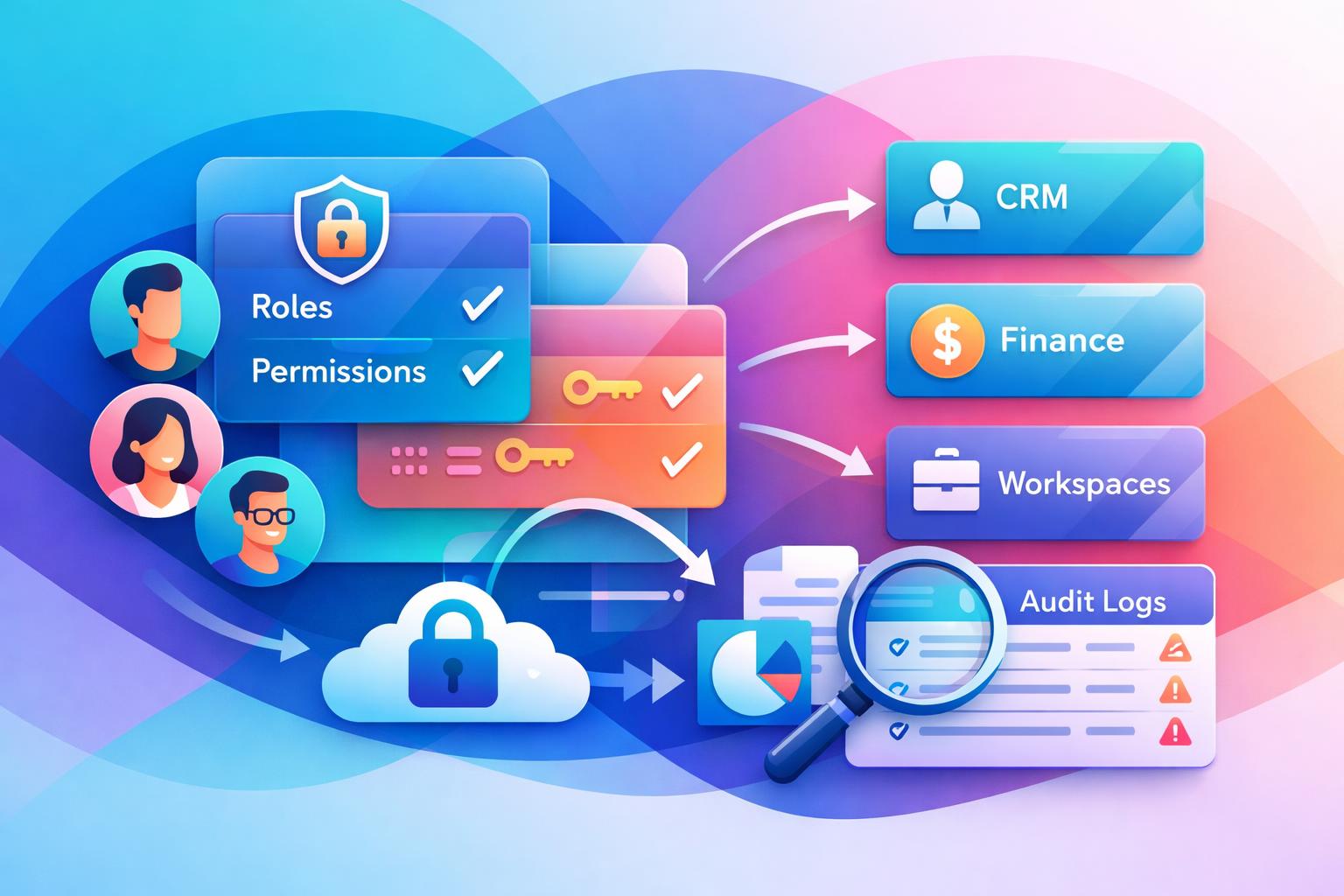
Security standards for B2B SaaS have evolved quickly. Customers and auditors now expect role-based access control (RBAC) and audit logging to be native parts of the product—not afterthoughts. It’s no longer enough to say you restrict access or log user activity somewhere; you have to demonstrate who did what, when, and why. This post explores how RBAC and audit logging work together to build trust without slowing teams, what growing SaaS organizations should watch for, and how MainFoundry’s security architecture puts permissions and traceability at the core.
Why RBAC and Audit Logging Matter for SaaS Growth
As SaaS companies grow beyond their founding teams, access control often becomes messy. Support staff, marketers, and engineers all need different levels of visibility and power. Without a defined structure, permissions turn into ad-hoc exceptions no one remembers later. RBAC prevents this by tying access to roles rather than individuals, defining actions for “admins,” “editors,” or “viewers,” and keeping updates automatic as people move or leave.
Audit logging complements RBAC by recording what actually happens. Even the best-designed roles can’t explain the “how” and “why” behind actions. Logs capture who acted, which role was active, and what data was changed—with success or failure outcomes included. This context transforms access control from assumption to proof, giving teams evidence for compliance programs like SOC 2 and ISO 27001.
Beyond compliance, integrated audit logging reduces internal friction. When questions arise, teams can consult clear records instead of relying on memory or assumptions. This not only accelerates investigations but also builds trust between departments, turning security into a productivity enhancer rather than a blocker.
“When RBAC and audit logs align, every action becomes both authorized and explainable—a foundation of trust for modern SaaS operations.”
How RBAC and Audit Logging Work Together in MainFoundry
MainFoundry treats these controls as core platform capabilities. Because it unifies CRM, marketing, finance, and custom workspaces, RBAC must apply consistently across very different data types. Roles are built around clear scopes and least-privilege principles, ensuring stable access across modules. When integrated with SSO, updates to roles synchronize instantly with identity changes.
Audit logging in MainFoundry is synchronized with RBAC evaluation. Every authorized action records not only what changed but why it was allowed, capturing access evaluations as context. This design means auditors and security teams can trace events based on defined policy, eliminating gaps caused by manual configurations or trust-based permissions.
Logs include access attempts—successful or failed—alongside permission updates and data modifications. Append-only storage and timestamp integrity ensure durability, while integrations with SIEM tools connect RBAC records to broader infrastructure monitoring. As a result, teams get unified oversight instead of isolated audits.
Consistency is key. The same definitions and logging standards apply whether reviewing a CRM record, billing permission, or workspace workflow. This unified approach answers audit questions about system-wide governance—found on MainFoundry’s security architecture page.
Custom workspaces extend those capabilities. Internal tools, project trackers, and approval pipelines inherit RBAC and audit visibility automatically. This avoids the patchwork of third-party apps with inconsistent models. Learn more in the custom workspaces overview.
Pro Tip: Align audit logs with live role evaluations. When permissions and logging share the same logic, investigations move from reactive cleanup to transparent assurance.
Key Takeaways
- RBAC scales securely by tying permissions to roles rather than individuals, simplifying access management.
- Audit logging transforms access control into clear evidence—capturing who acted, which role was active, and what changed.
- Linking RBAC and logging ensures every action is both authorized and explainable.
- Consistent controls across CRM, finance, marketing, and internal workflows reduce audit risk and increase clarity.
- Platforms with integrated security architectures—like MainFoundry—simplify compliance and keep teams efficient.
Related Reading
For deeper insights into platform security practices, explore MainFoundry’s Security Architecture or reach out directly via their contact page.