
SaaS Annual Billing Discounts That Boost Cash Flow
 Jørgen Wibe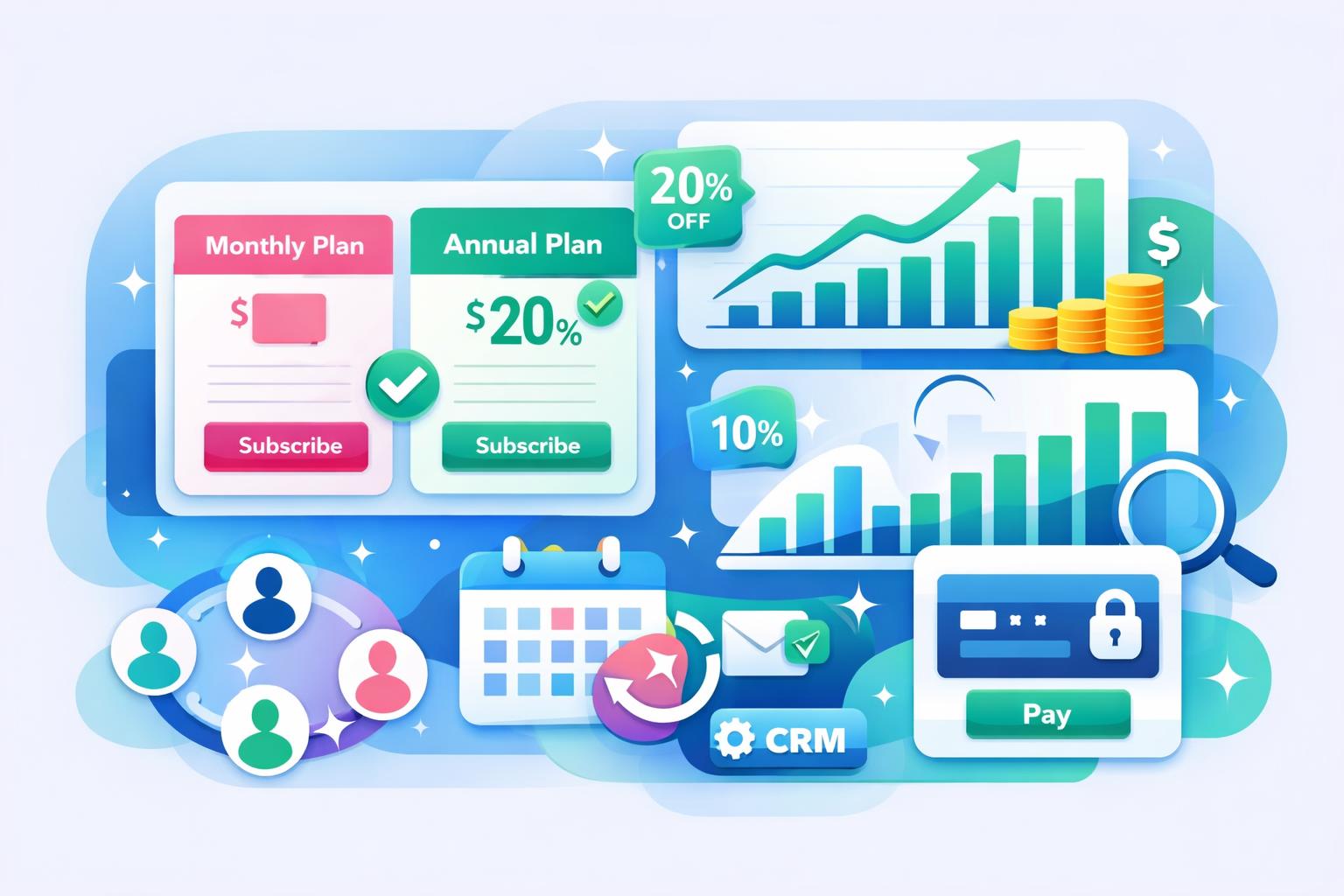
Annual billing discounts are one of the most effective levers SaaS companies can use to improve retention, stabilize revenue, and strengthen cash flow. Yet many businesses struggle to find the right balance between motivating customers to commit and protecting long-term margins. A discount that feels too small rarely changes buying behavior, while overly aggressive pricing can erode profitability and create expansion challenges later.
This guide explains how to structure annual SaaS pricing without damaging revenue health, why annual plans often reduce churn, and how to operationalize discounts and coupons effectively. You’ll also see how connected systems, including subscription and billing management tools from MainFoundry, help teams manage pricing experiments and promotional workflows at scale.
How to Structure Annual Billing Discounts Without Hurting Margins
For most SaaS companies, a discount between 17% and 20% is the safest starting point. That range aligns with the familiar “pay for 10 months, get 12” structure buyers already understand. It also creates enough incentive to encourage annual upgrades while remaining sustainable for businesses focused on healthy recurring revenue.
Discounts under 10% often fail because customers prioritize flexibility over relatively small savings. In contrast, discounts above 25% can create pricing pressure later, especially when monthly customers begin questioning the value gap between plans. Additionally, aggressive annual pricing may reduce future expansion revenue opportunities if customers lock into heavily discounted long-term agreements.
Most SaaS companies succeed with annual discounts between 15% and 25%, depending on churn, retention strength, and growth strategy.
The ideal discount depends heavily on your retention profile. Products with low churn and strong adoption frequently convert annual plans with modest incentives around 10–15%. However, higher-churn products may justify stronger discounts because annual commitments reduce cancellation opportunities and increase customer lifetime value.
- Low churn SaaS products generally perform well with annual discounts around 10–15%.
- Moderate churn businesses often benefit from discounts in the 15–20% range.
- Higher churn or aggressive growth-focused companies may justify annual incentives between 20–25%.
Cash flow also plays a major role in pricing decisions. Annual subscriptions pull twelve months of revenue forward immediately, giving early-stage SaaS businesses additional working capital for hiring, acquisition campaigns, or product development. In many situations, the cost of the discount is lower than the cost of raising outside capital.
“Annual billing changes not only pricing behavior but also the timing of customer commitment and revenue stability.”
Presentation matters almost as much as the discount itself. SaaS companies frequently see higher annual adoption when yearly plans appear as the default option on pricing pages. Messaging also influences conversion rates significantly. Buyers often respond more strongly to “Save $240 per year” or “two months free” because those savings feel more concrete than percentage-based math.
Operational flexibility becomes essential once pricing experiments begin. Platforms such as MainFoundry allow businesses to centrally manage discounts, annual plans, and promotional logic through integrated billing management workflows rather than rebuilding billing systems every time pricing changes.
Why Annual Billing Improves SaaS Retention and Cash Flow
Annual plans improve retention because they fundamentally change customer evaluation cycles. Monthly subscribers reassess value every few weeks, while annual customers typically reconsider once per year. That reduction in churn exposure alone can significantly improve long-term retention metrics.
Additionally, annual customers have more time to embed your product into workflows, reporting processes, and operational habits. By the time renewal arrives, switching costs are often much higher because the software has become integrated into day-to-day operations. This is especially valuable for businesses dealing with moderate monthly churn.
Pro Tip: Instead of promoting annual plans immediately during signup, many SaaS companies convert more customers by triggering upgrade offers after users reach activation milestones and demonstrate consistent product usage.
Cash flow benefits can be equally transformative. Upfront annual payments reduce revenue volatility, improve working capital, lower failed-payment exposure, and increase forecasting accuracy. For SaaS operators managing growth carefully, predictable revenue is often more valuable than maximizing short-term monthly conversion.
Successful annual billing strategies also depend on lifecycle timing. Teams often see stronger conversion rates when they target engaged users after onboarding milestones are complete. For example, a customer who has been active for 90 days and exceeded usage thresholds is typically more receptive to a limited-time annual upgrade offer than a brand-new signup.
This process becomes much easier when billing, CRM, and marketing systems work together. MainFoundry’s unified CRM platform and marketing analytics and attribution tools allow teams to identify highly engaged customers, automate campaigns, and measure how discount offers influence retention over time.
Coupon management is another area where operational discipline matters. Many SaaS businesses unintentionally create discount creep by allowing inconsistent promotions across sales and marketing teams. Over time, customers begin delaying purchases while waiting for larger discounts, weakening pricing integrity.
A stronger approach is to establish clear discount guardrails with centralized approval workflows. MainFoundry’s billing workflows support this by allowing companies to configure discount rules, reporting, approval processes, and usage restrictions from one operational system. As pricing complexity grows across segments and contract lengths, centralized visibility becomes increasingly important.
Multi-year agreements can also improve revenue stability, particularly in B2B SaaS environments where switching costs are already high. However, businesses should evaluate support costs, future expansion potential, and pricing flexibility before offering aggressive discounts for two-year or three-year commitments.
Key Takeaways for Annual Billing Discounts
The strongest annual billing strategies balance customer incentives with long-term profitability. Most SaaS businesses perform well with annual discounts around 17–20%, although higher-churn products may justify larger incentives to improve retention and customer lifetime value.
Companies that succeed with annual billing typically combine thoughtful pricing structure, visible annual plan positioning, lifecycle-based upgrade campaigns, and disciplined coupon management. Measurement is equally important. Teams should continuously monitor retention differences, annual adoption rates, cohort profitability, and revenue predictability to refine pricing over time.
As subscription operations become more sophisticated, connected systems create a major advantage. MainFoundry’s custom business workspaces centralize analytics, CRM data, billing workflows, and operational reporting so teams can experiment with pricing while maintaining visibility across the customer lifecycle.
Related Reading
Learn more about subscription management, billing workflows, and SaaS operational reporting at MainFoundry or contact the team directly at https://www.mainfoundry.com/contact.