

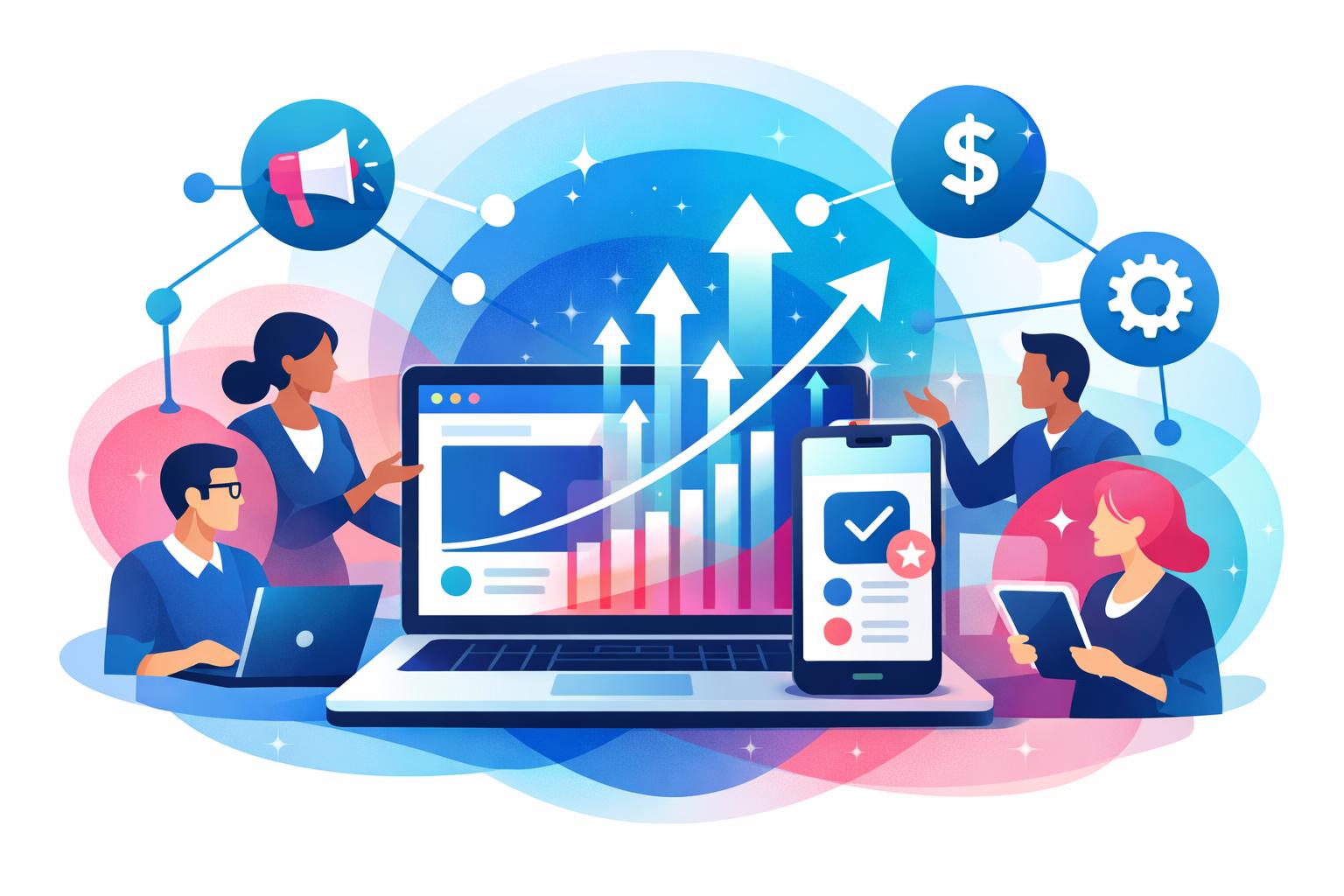
Not every growth strategy begins with a sales demo. For many modern SaaS teams, it begins with the product itself. Product-led growth (PLG) is transforming how software companies attract and retain users by making the product the center of the buying journey. This article explores what PLG means, how it actually works in daily operations, and why it’s reshaping key metrics and processes across SaaS organizations.
What Is Product-Led Growth and How It Works
At its core, product-led growth is a go-to-market approach where the product drives user acquisition, activation, retention, and expansion. Instead of persuading prospective customers through long sales cycles, PLG allows them to sign up instantly, experience value firsthand, and upgrade when ready. The product becomes both the entry point and the primary conversion channel.
This model fits SaaS exceptionally well because software can deliver value straight away. When onboarding is intuitive and the core use case is clear, users quickly reach the “aha moment” — the instant they realize the product solves a real problem. That moment dramatically increases retention and customer lifetime value.
In a strong PLG environment, the product doesn’t replace sales or marketing; it shifts when they enter the conversation. Teams move from pre-purchase persuasion to post-experience engagement. This creates faster feedback loops and helps companies refine both product and pricing based on real usage patterns.
When your product delivers value before the first payment, growth becomes inevitable.
How PLG Transforms Team Dynamics and Metrics
Adopting PLG changes how teams think about growth. Product and engineering teams now influence revenue directly through usability, feature adoption, and performance. Marketing focuses on driving signups instead of gated leads, while sales teams engage accounts that already display usage intent through in-product data.
Metrics evolve accordingly. Instead of lead quantity, teams measure activation rates, retention triggers, and upgrade paths. These product signals replace static CRM stages with continuous behavioral insights. Companies often combine PLG with selective sales motions for enterprise or high-touch accounts, creating a balanced, hybrid approach.
Successful execution depends on integrated systems that align product usage with billing and analytics. Platforms like MainFoundry unify CRM, marketing analytics, and finance data so teams can manage this cycle seamlessly. Features such as self-serve billing and conversion tracking empower SaaS teams to scale without friction while custom workspaces tailor processes to specific PLG workflows.
“The strength of a product-led strategy comes from making your product the ultimate salesperson—and your users its best advocates.”
Key Takeaways
- Product-led growth transforms your product into the engine of acquisition, engagement, and revenue.
- Strong onboarding and freemium experiences accelerate value perception and long-term retention.
- Cross-functional collaboration becomes essential as product, marketing, and finance share the same data sources.
- Unified platforms like MainFoundry simplify operations by linking billing, analytics, and customer insights.
- PLG is scalable when your systems support self-service and ongoing iteration based on real user behavior.
Related Reading
Explore how unified analytics enhance SaaS performance in our guide to marketing analytics for growth teams.